Objectives
Systems Graph
Strategic Objective: To build and democratize a comprehensive, interactive model that visually maps data attributes, roles, and access permissions across all core Verizon applications.
Project Overview: To truly understand how people's data currently works across Verizon’s touchpoints, we needed a dynamic way to catalog our data. The team developed a relational ontology in Airtable using Figma, and ultimately in Gemini that transformed scattered identity and account attributes into a single, scannable visual format. This tool empowers designers, developers, and business stakeholders to see and sense the complexity of our current state.
Key Impact
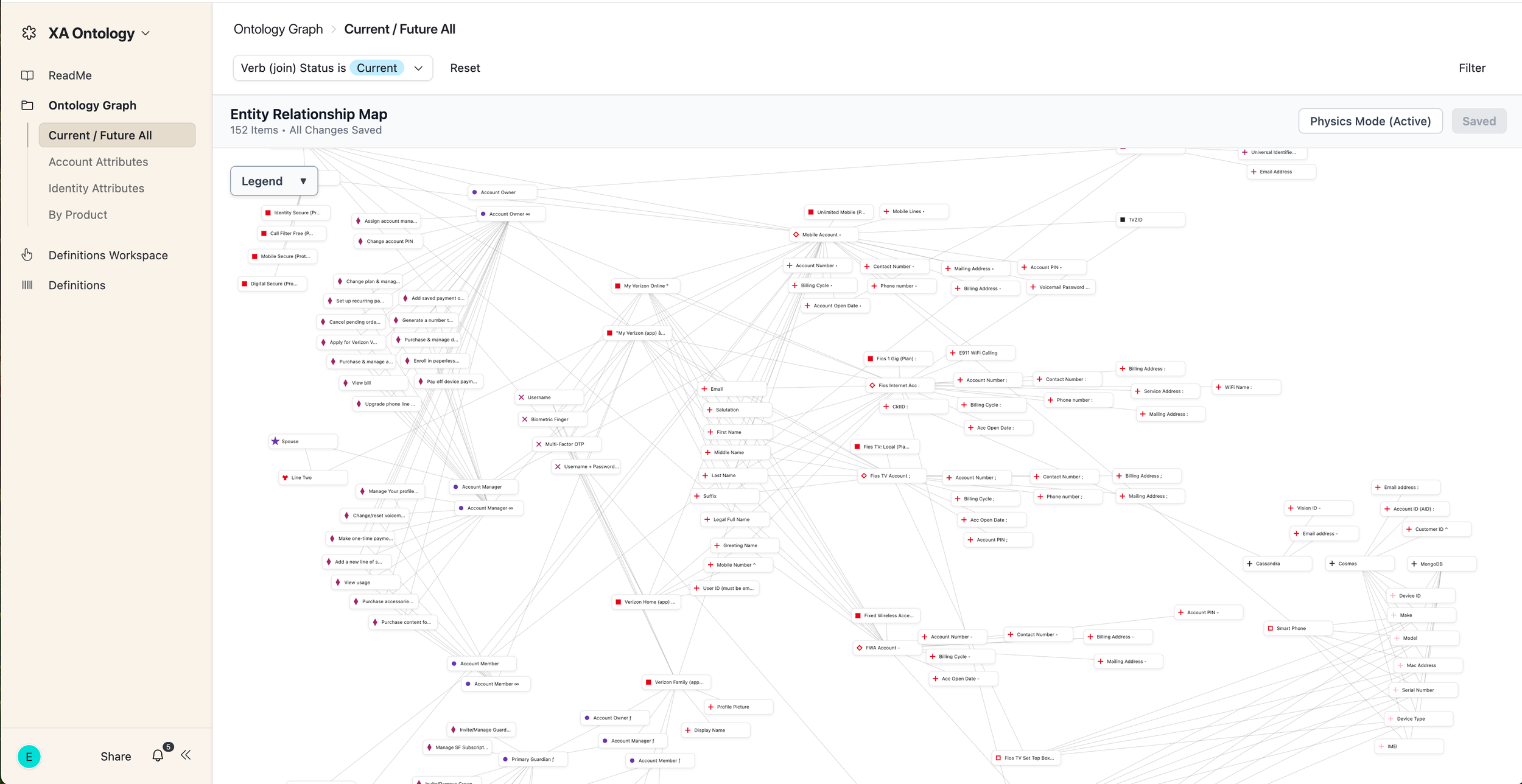
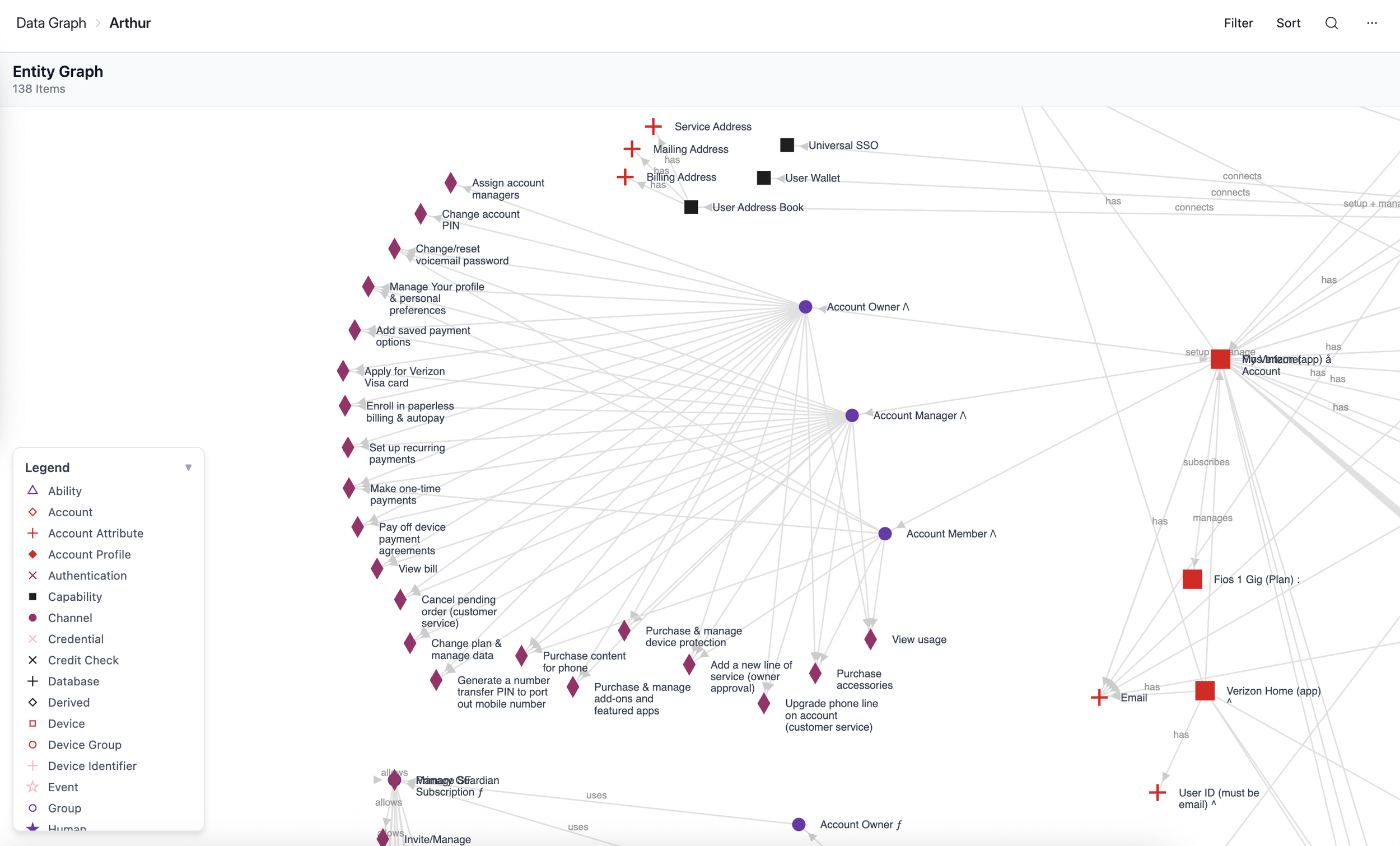
Data Democratization: Developed an interactive Systems Graph that mapped attributes and permissions across the Verizon product ecosystem (MVA, Family, Home, Protect, Cloud).
Metadata Strategy: Established a metadata classification system that categorized attributes into four distinct operational buckets (Identity Core, Global Profile, Local Feature, Regulatory) to govern future data usage.
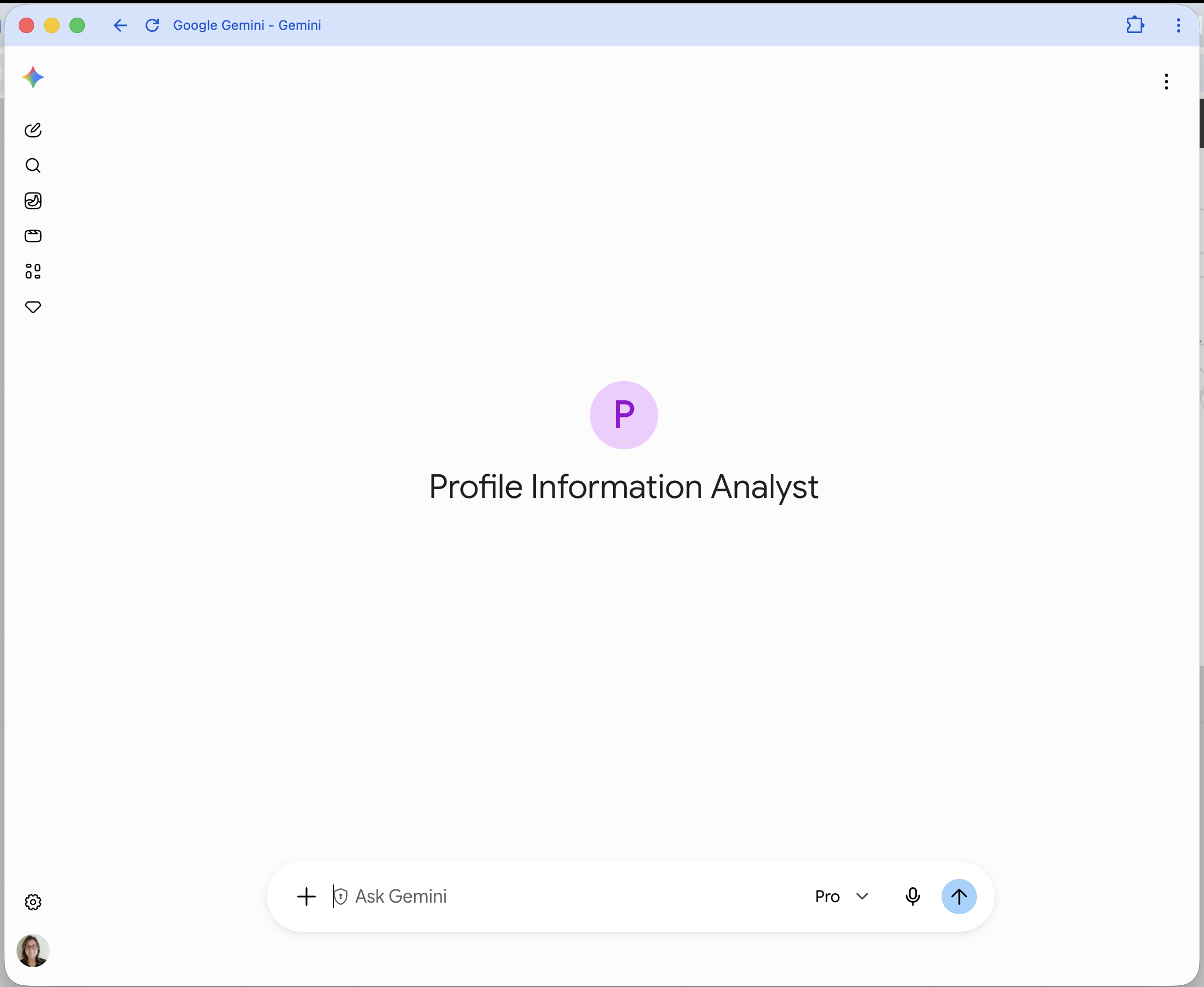
AI Tooling Integration: Successfully brought the complex attributes systems graph into an interactive Gemini Gem, allowing cross-functional partners to query complex roles and permissions data via AI natural language.
Proactive Governance: Partnered with development to feed the ontology into Figma AI prototypes, creating a design-phase "spell checker" that ensures teams accurately utilize identity attributes before building.
Tools: Airtable, and Gemini
Using Airtable as a relational database, we wanted to organize and visualize the complex data in an multi-faceted way. Within Airtable we created an Ontology to map the relationship of product, data, role, permission and unique attributes like ‘line’ that exist only in telecom. This process created machine-readable data that was mapped appropriately and accurately.
The advantage of mapping the data through Airtable is we were able to connect that data to a Gem called Profile Information Analyst, where the data become queryable in a plain-text and human readable way. This Gem became accessible to anyone in Verizon.
AI Workflow
My Role
As the team lead for Identity Architecture, my role was to identify and create resources that supported alignment between core and non-core products within Verizon. After spending time in the profile space, it became clear we had misalignment across many naming structures. One app would use ‘display name’ another ‘greeting name’ and another required ‘legal full name’ - this was a problem. I initially started cataloging data in Airtable myself, learning how to organize the information better, and consuming and adjusting the previous work on global attributes from the original creators.
As I worked with the team on the identity attributes, one of our team members suggested creating an ontology to represent the relationships between product data, global attributes, and permissions. My role shifted to co-creating and supporting this team member’s vision. As they evolved what I started in Airtable, I became the project's support, champion, and stakeholder manager. While the ontology made sense to the team, my job was to get the cooperation and support from our partners, in which we presented the work at a Design Forum, and I pursued and created partnerships outside of Experience Architecture to get our colleagues on board.
Once the data was organized in Airtable and visualized in the System’s Graph, it was an easy venture to develop a Gem with the machine-readable data. With support from another teammate in Experience Architecture, my teammates and I created the Personal Attribute Gem.