Strategic Objective
Omni-channel Journey Management Tool
To design and implement a new, interactive tool capable of hosting live omnic-hannel blueprints that span customer intents, providing cross-team visibility into the end-to-end customer journey.
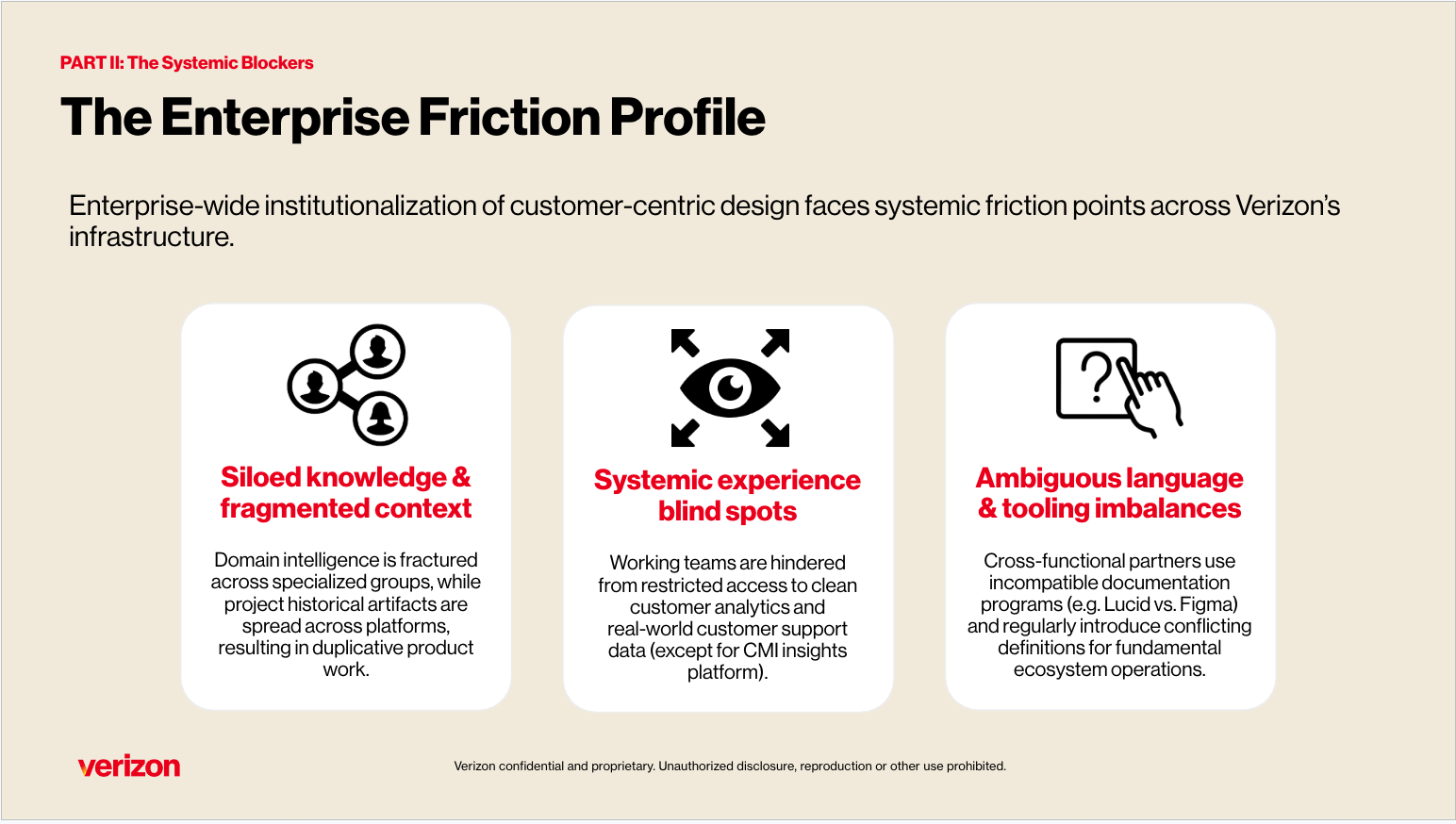
Project Overview: As part of the Customer Intents team, I identified a need to move beyond static journey maps to create a dynamic, centralized tool for journey management. By mapping the end-to-end journeys across an omni-channel, customer-centric view, this tool allows teams to identify pain points and opportunities directly tied to customer intents. With the provided new metric of Customer Effort Score, the tool is able to highlight and compare where friction exists in a massive eco-system like Verizon.
Key Impact
Innovative Prototyping: Spearheaded and prototyped a Gantt-style mapping tool in VS Code using Claude created for the end-to-end mapping of customer intents.
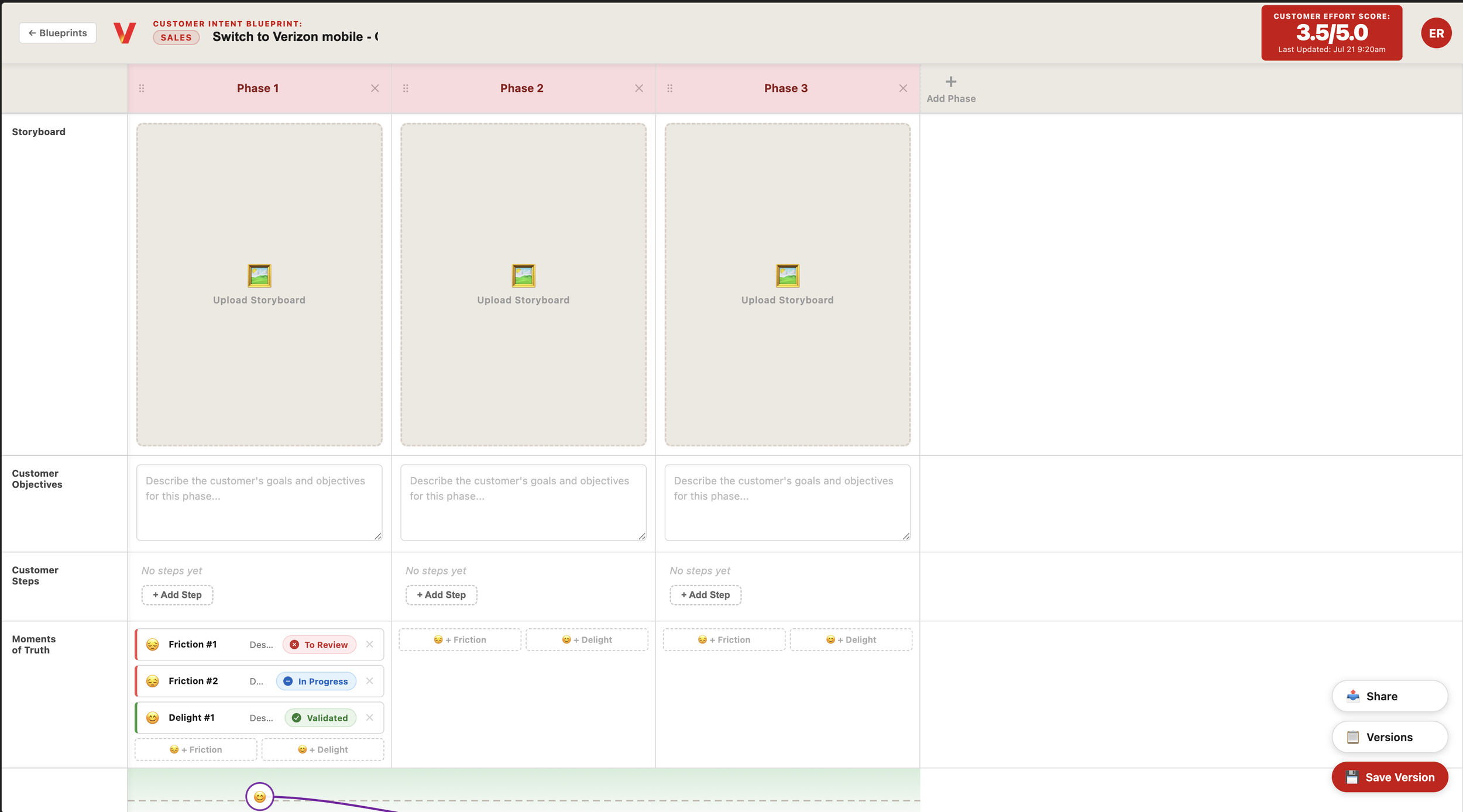
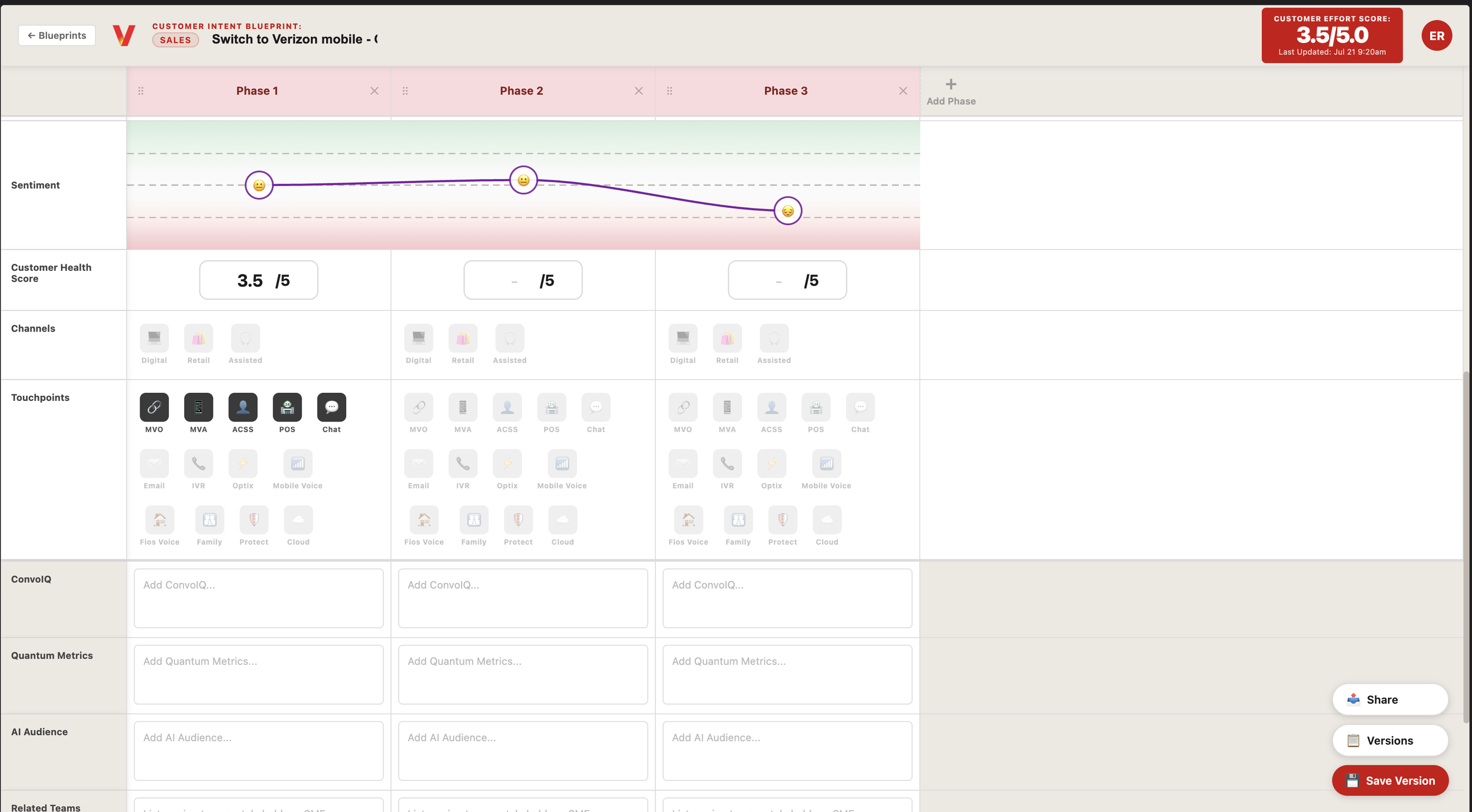
Holistic Journey Visibility: Designed the tool to display critical journey phases, touchpoints, metrics, customer sentiment, and pain/delight moments across the ecosystem.
Journey Management Process: Researched and developed a formal journey management process utilizing the blueprinting tool to foster cross-team collaboration and cross-channel visibility. Created pathways to increase access to the tool across product partners.
Real-World Application: Successfully utilized these blueprinting frameworks to support the end-to-end mapping for Project Beacon alongside Digital Designers.
Tools: VS Code + Claude, Gemini and Figma
To create this working prototype, I used a combination of prompts, wireframes, and examples to create an outline of each major page. We were able to upload the list of intents through a csv file and enhance the prototype over the course of a few weeks.
Once it was working, we interviewed our fellow colleagues to gather feedback and improve the experience.
AI Workflow
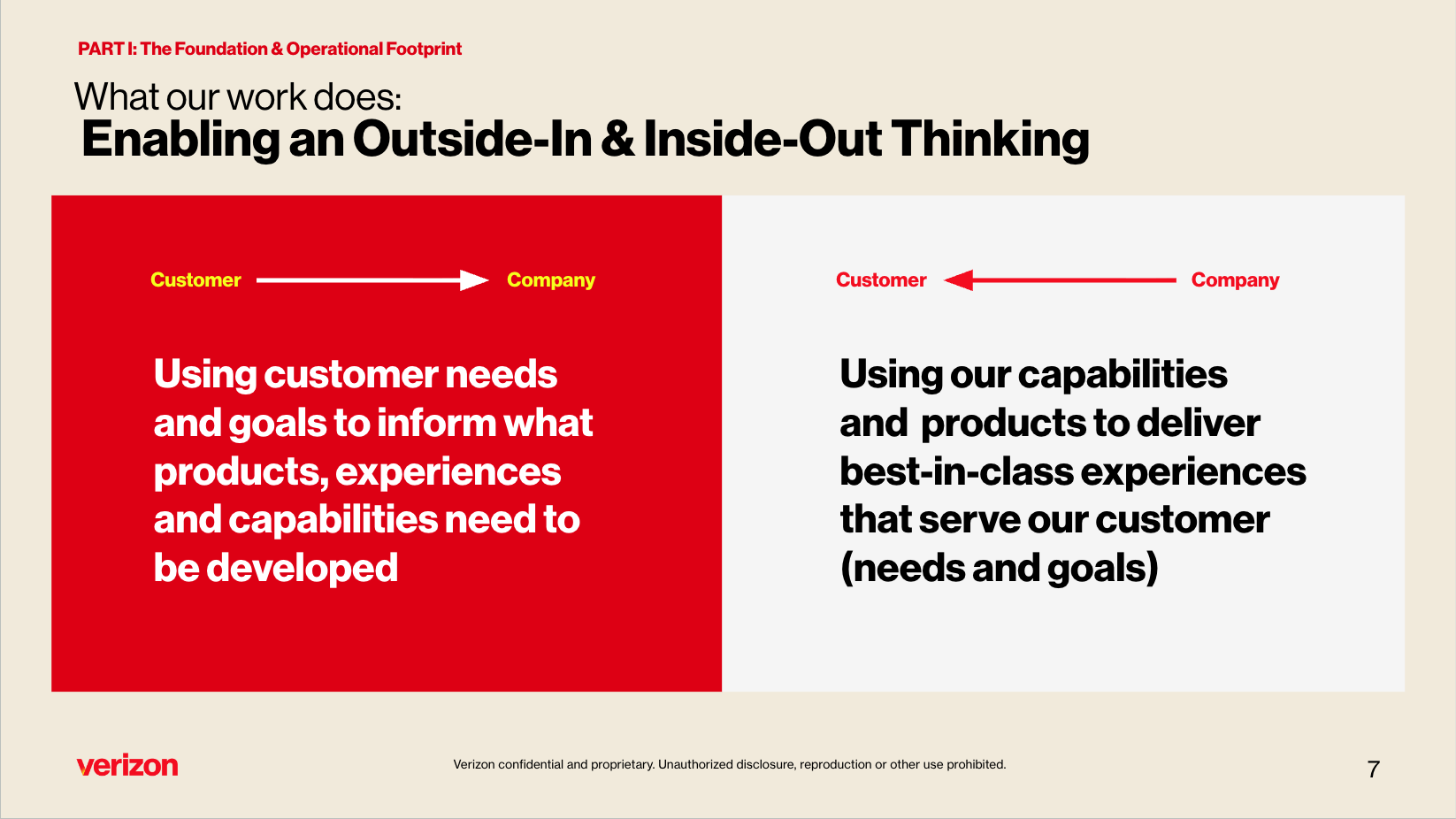
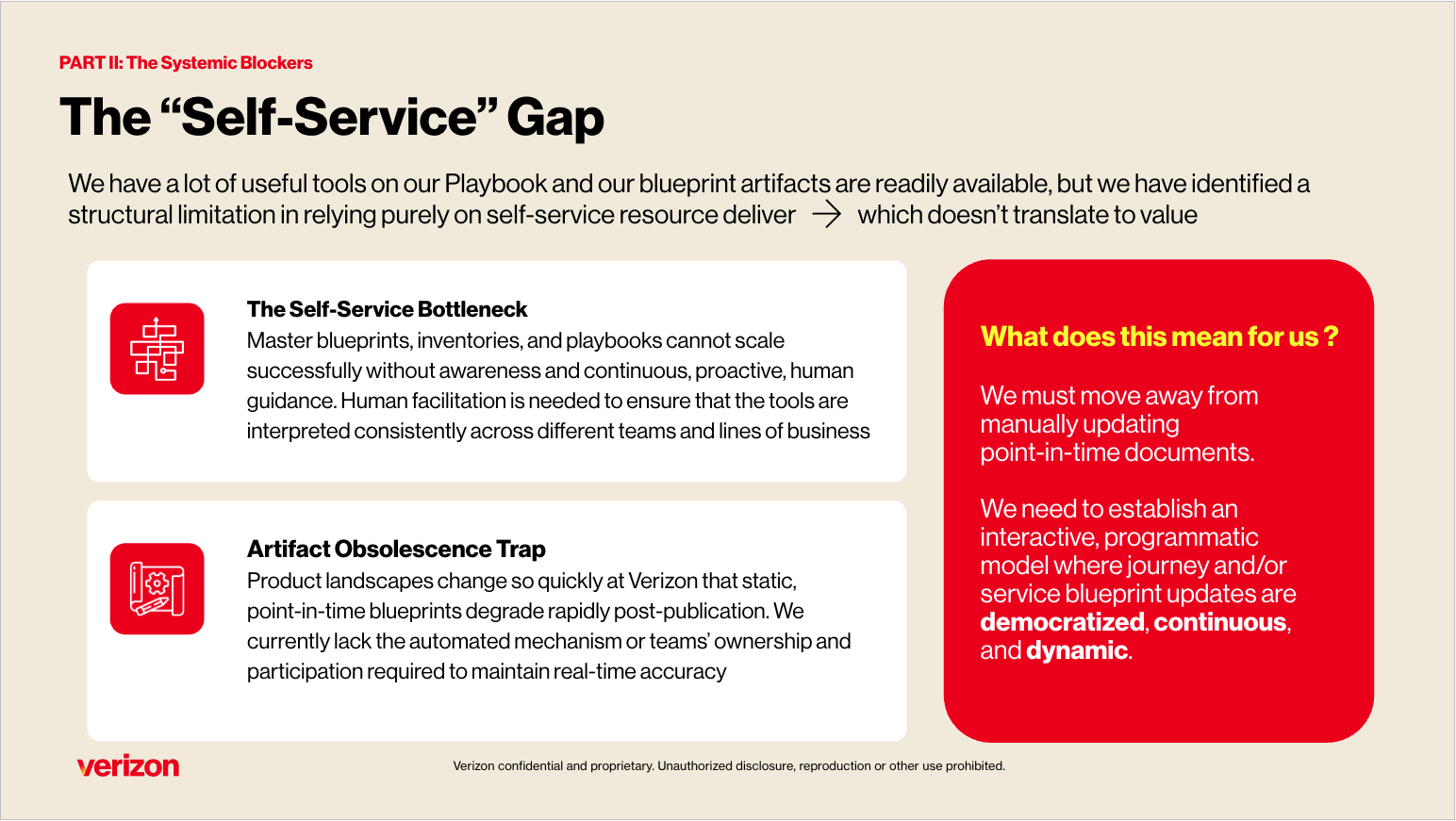
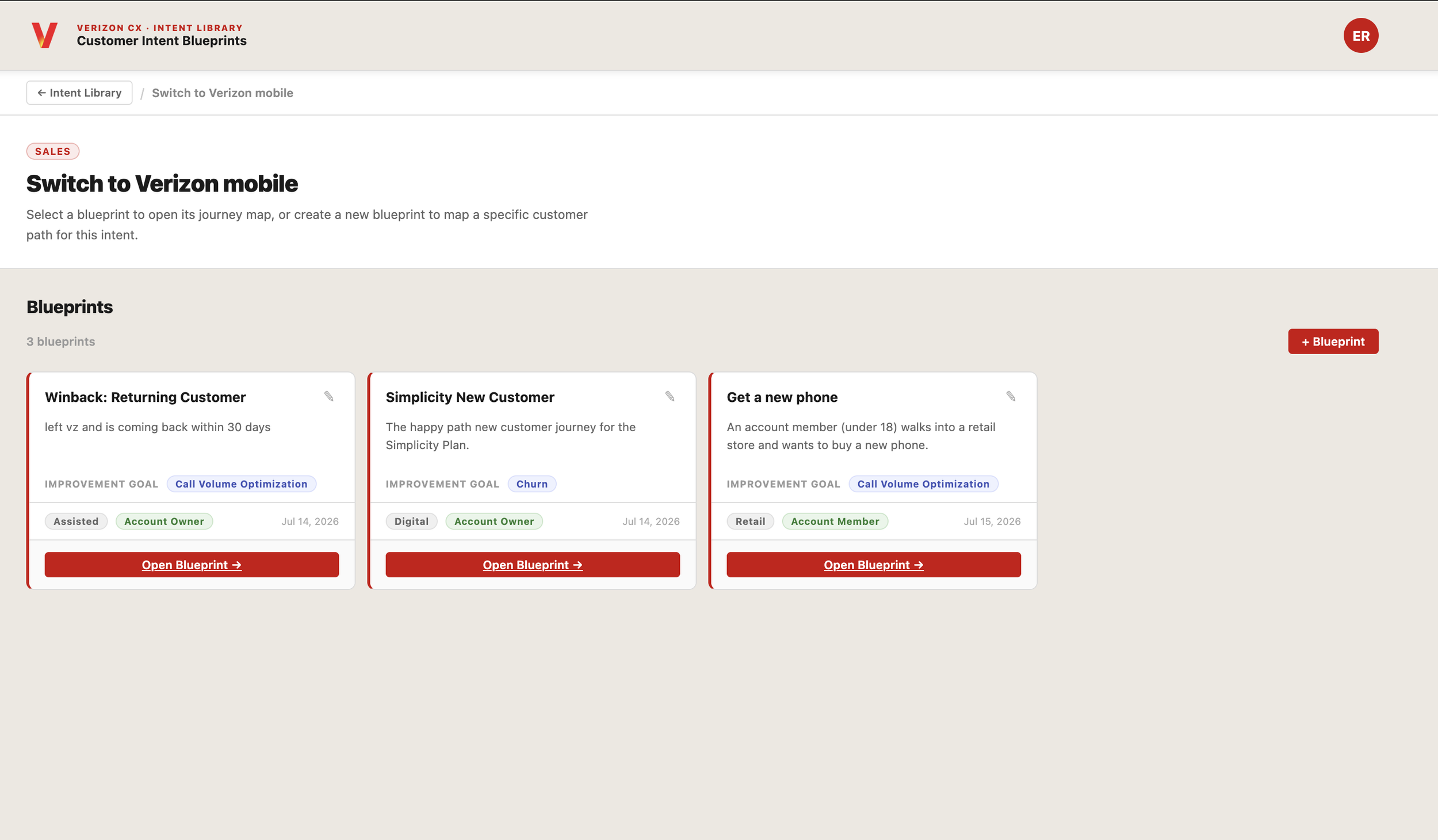
The goal is to move from static one-off blueprints to a living catalog of ‘live’ hosted blueprints.
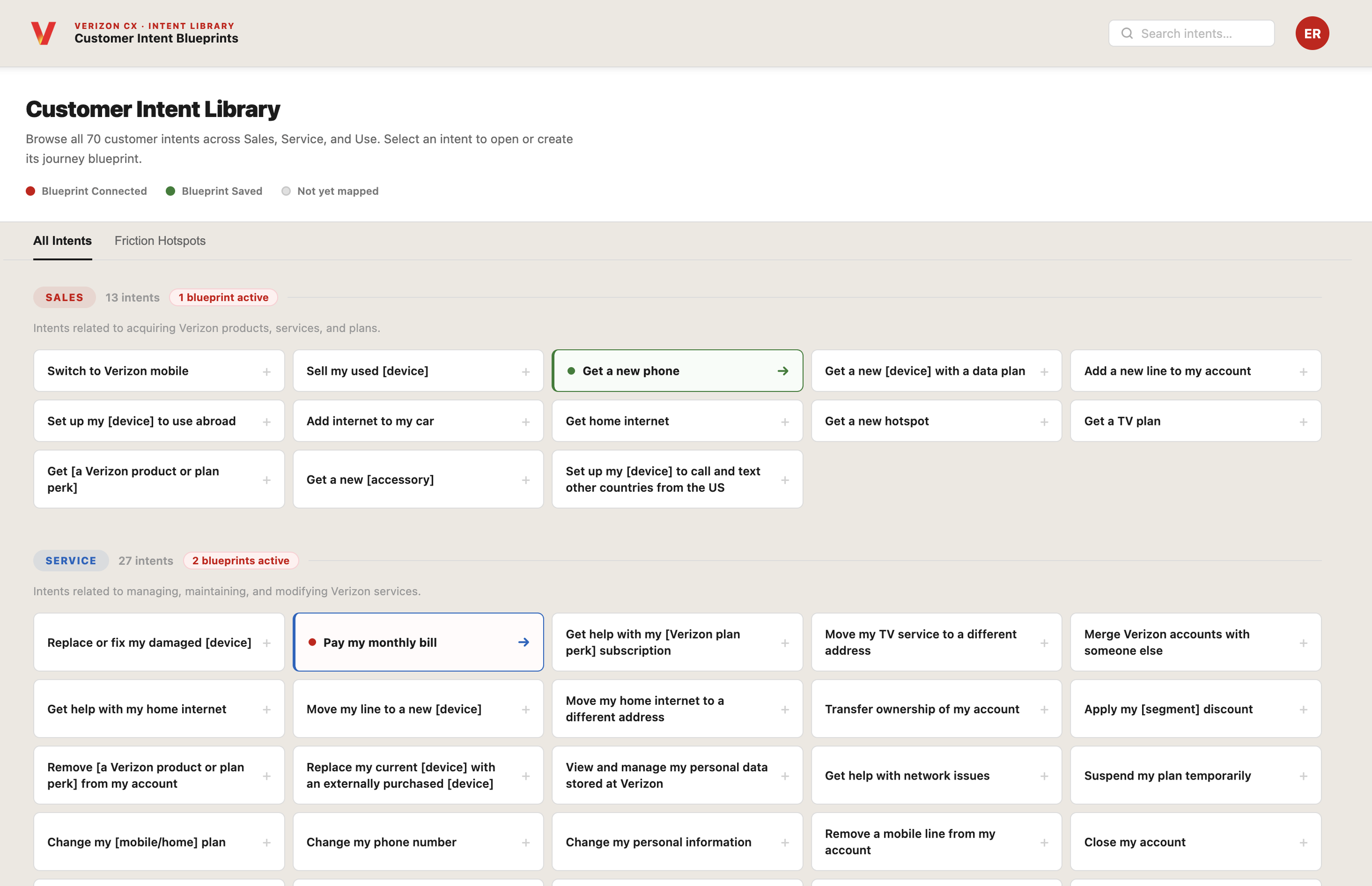
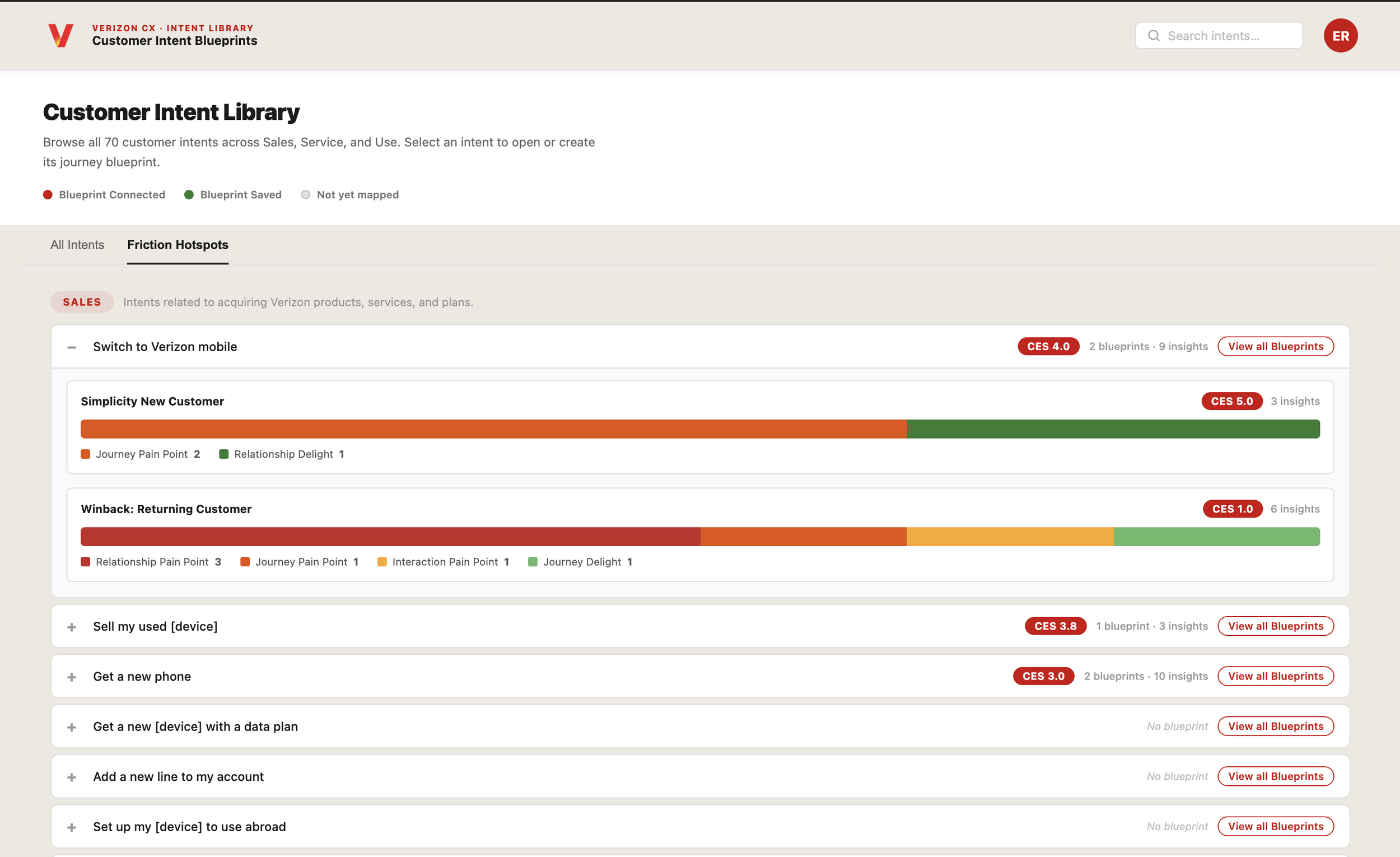
What are customer intents?
Customer Intents are a human-centric framework to understand how customers engage with our products. You can think of them as Verizon’s version of “Jobs to be done”.
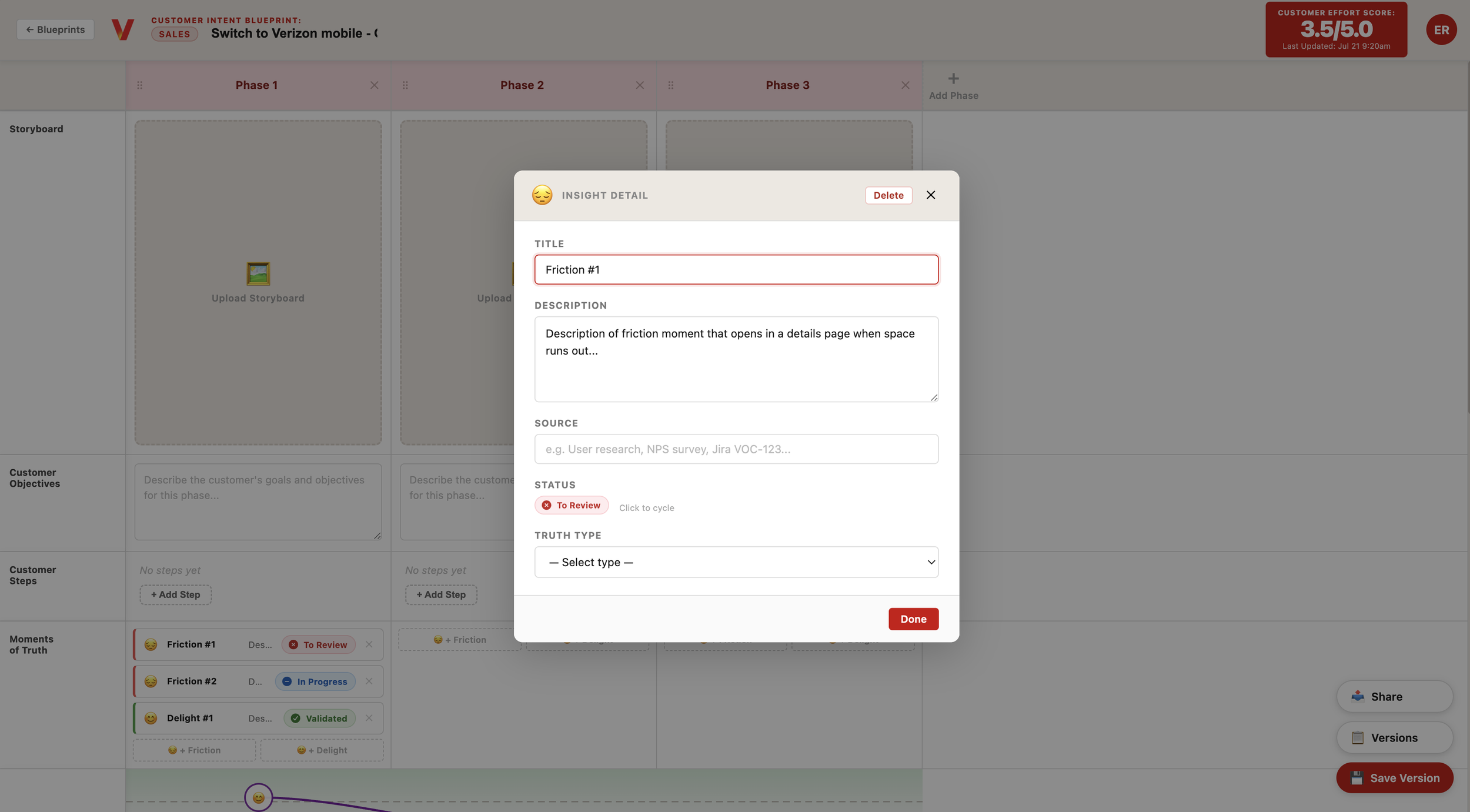
Each intent has multiple pathways documented through blueprints. Each blueprint has pain and delight points tagged with relationship, journey, or interaction to catalog the type of experience the customer is having. These are tallied and shown in the bar graph, and each blueprint is given a Customer Effort Score to show how well that intent is working for our customers.
Each blueprint within an intent exposes the multiple ways a customer can engage with Verizon. When creating every blueprint, we want to understand which channel this task happens in, what role the customer has, and what the improvement goal is.
Here is a blueprint from the customer’s perspective that shows a phase, storyboard, customer objectives, steps, moments of truth (pain and delight points), as well as sentiment and phase score. The phase scores are averaged to give the entire blueprint a CES (Customer Effort Score).
My Role
Spearheaded Tool Development: I conceptualized and prototyped a blueprinting tool designed for end-to-end mapping of customer intents. I owned the tool's presentable copy and kept it up to date in VS Code. With the team’s collaboration, we iterated and developed the tool. I also pursued and researched which metrics to use, whether it was a Customer Health Score or Customer Effort Score, and championed categorizing each pain/delight point as either an interaction, journey, or relationship issue.
Journey Management Integration: I led the Customer Intents team in considering what a Management process would look like, how the tool would integrate, what management would look like within Verizon’s business structure, and how we would align with other teams, including our Customer Research partners. I led the team by dividing up work and allowing each team member to coordinate and collaborate on a presentation deck around Journey Management.
User Research: As the tool developed, we wanted to gain insights from our peers. The team created a research script and collectively built a list of partners to target. Since the Customer Intents team is well-versed in research, we took turns leading conversations with our peers and running sessions. As team lead, I always encourage this type of work to be collaborative so each team member stays engaged and learns along the way.
The Path Towards Journey Management
In conjunction with the creation of the tool itself, is a change in process from within. Rather than one-off mapping exersizes, the Customer Intents team was re-imagining how we worked. The next evolution of the team was to lean into Journey Management.